Wednesday, March 23, 2016

Jean-Michel Basquiat


"This is a song for the genius child.
Sing it softly, for the song is wild.
Sing it softly as ever you can -
Lest the song get out of hand.

Nobody loves a genius child.

Can you love an eagle,
Tame or wild?
Can you love an eagle,
Wild or tame?
Can you love a monster
Of frightening name?

Nobody loves a genius child.

Kill him - and let his soul run wild."


--Langston Hughes


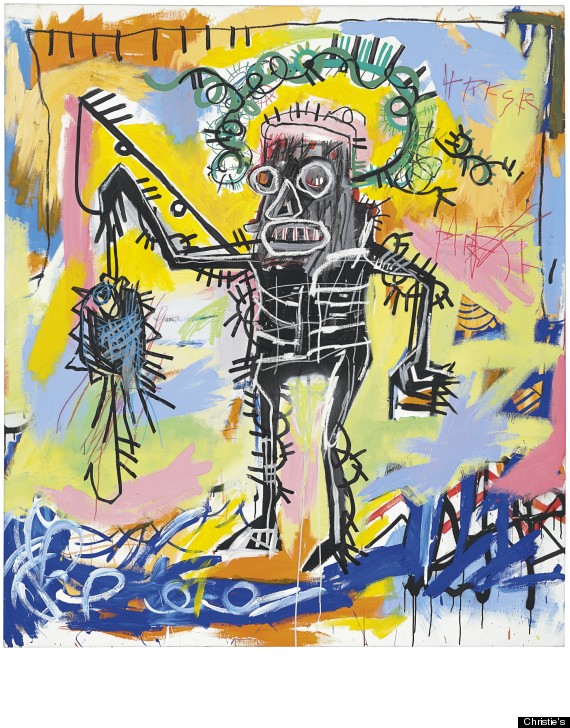
There's a cemetery in Brooklyn bearing the name of a gone-too-soon visionary of his time. Toward the end of 1988, Gerard Basquiat held a closed casket service for his 27 year old son. Only a handful of the dead artist's friends were invited to the ceremony , but word had spread to greedy art dealers. They were the carrion eaters, ready to pick and pry on the 2,000 plus pieces of art left behind. Jean-Michel Basquiat was born at the tail end of 1960. As a child, he started out scribbling on the scraps of paper his father brought home from his accounting job. By age 17, Jean was making comics with his friend Al Diaz and skipping class. Their famed pseudonym "SAMO" sprang forth from a school assignment and became the beginning of the underground graffiti movement in New York. Odd phrases were punctuated with a copyright symbol and found on scattered buildings around the downtown Manhattan. This was the beginning of Jean's entrance into the art world.

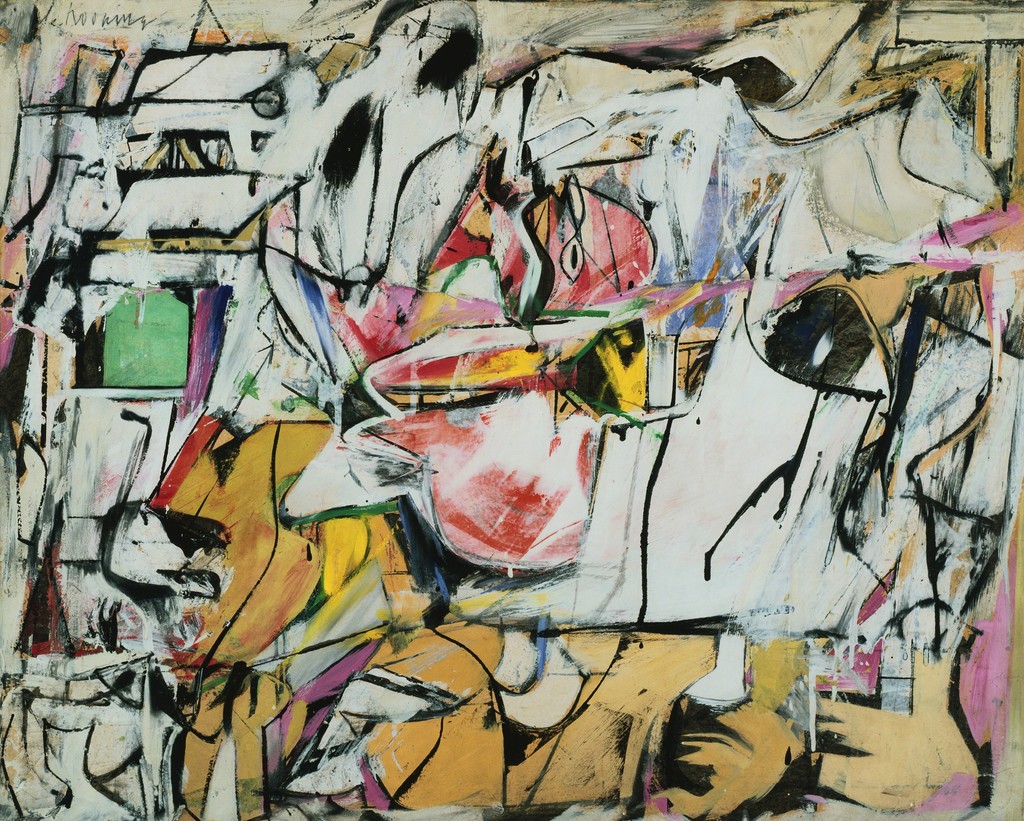
Jean grew up educated in various private schools before dropping out in 1978. He was multilingual with his parents' languages: French, English, Creole, and Spanish. After his parents divorced, he resided with his father while his beloved mother lived between mental health facilities. After he quit school, it was the beginning of a life long struggle to regain his father's respect for his chosen "field of study". His first big break came in 1980 with the groundbreaking exhibition entitled The Times Square Show. The rich and brutal history of African Americans as well as the present issues he witnessed as a young black artist living in Manhattan were used as fuel for his artistic purpose. He borrowed visual cues from artists like Cy Twombly and William de Kooning.
Twombly
de Kooning


With the growing pressure on the New York art scene, Jean-Michel was faced with a dilemma. He was "outsider art" suddenly on the forefront of "high art" and for a blossoming artist, the expectation set upon his shoulders was crushing. He had never been rich before and often just hid thousands of dollars between books, under mattresses, and in any nook he could find. Who to trust and what to do with himself added to the mounting issues. On top of everything else, he had an evolving drug addiction. In high school, it was no secret that Jean smoked marijuana with Al Diaz. Later in his art career, he claimed that heroin helped him focus on making more paintings. It can be argued that pressure from his dealers drove him to take attention enhancing drugs, but the unfortunate end result remains the same. He hopped on a rocket of fame, and in August of 1988 it exploded under him. A fatal heroin overdose brought an end to Jean-Michel Basquiat's life.

When he was alive and thriving, Jean found himself in the company of legendary greats in the circuit of underground clubs. People like Andy Warhol and Keith Haring had very close companionship with the neo-expressionist. The singer Debbie Harry was the first person he ever sold a painting to.
Keith and Jean
William Burroughs, Jean, Debbie


Jean's work ethic comes as no surprise given the excessive amounts of work he produced in his short career. He would go out and cavort in the hallmark underground 80's clubs (CBGB, Mudd club, Club 57, Studio 54, etc) and then isolate himself for days at a time to paint and "makeup for lost time." People who hung around to watch him paint say that he allowed himself to be completely overloaded with information as he made work. Books, television, and music. Grey's anatomy, the news, and Charlie Parker. All of it filtered into his head and ended up as output onto a canvas in the form of acrylic paint or oil stick. As his drug addiction grew worse, his paintings became sparse and barren.

1988
1981


Monday, February 29, 2016

First and Last Lines


"It was a bright cold day in April, and the clocks were striking thirteen."


1984 (published 1949)
George Orwell
Born: June 25, 1903, Motihari, India
Died: January 21, 1950, London, United Kingdom

Orwell was educated in England and joined the Indian Imperial force in Burma when he completed school. After he quit the military in the late 1920's he moved to Paris to be an unsuccessful writer. From 1930's onward, he considered himself a socialist and a devout anti-Stalinist. His best known works are Animal Farm (1945) and 1984 (1949).


1984 is about a character named Winston living under repressive government ultimately ruled by Big Brother. He experiences a brief rebellion with another civilian named Julia even while Big Brother and his minions are monitoring their every move.

I read this book at around 13 or 14 years old, admittedly only because I knew that David Bowie had written a concept album based off of his admiration for the novel. The album itself becomes much more dimensional with the context of the book. The book remains one of the better, poignant dystopian novels I've read. I probably wouldn't reread it, but I remember the excitement of wanting Julia and Winston to escape and work out somewhere new. I remember the sad ending, as well. Everyone needs to read this book, even if they end up hating it.


"She sat staring with her eyes shut, into his eyes, and felt as if she had finally got to the beginning of something she couldn't begin, and she saw him moving further and further away, further and further into the darkness until he was the pin point of light."


Wise Blood (published 1952)
Flannery O'Connor
Born: March 25, 1925, Savannah, Georgia
Died: August 3, 1964, Milledgeville, Georgia

O'Connor was a southern essayist and writer and mainly stuck to her Southern Gothic style. It is said that many of her characters are grotesque in nature and reflect her Catholic views as well as southern issues regarding race and morality. 

Wise Blood is about Hazel Motes, a 22 year-old war veteran struggling with his faith. He meets an array of off kilter characters like a self-blinded street preacher and his daughter (Asa Hawkes and Lily Sabbath), a crazy 18 year old zookeeper with "wise blood", and a mummified holy child. Hazel encounters false prophets, redemption, and retribution. 

I don't personally foresee this book being one that I would particularly enjoy. Characters based around the absurd spectrum of religion have a way of stressing me out to the point of not being able to read the book for what it is. 

Future Legend

A few interesting things I picked up from the 417 trip was their willingness to collaborate with each other as colleagues and that is always something I enjoy seeing. Although, I noticed how restrained the look of their magazine was, so that makes me wonder about their separate personal approaches to the elements of design. How different are their ideas about the design of different pages? 
As they grow along with the city of Springfield, I hope their diversity of subjects expands to meet the needs of the larger crowd of people who are interested in the life of this town.


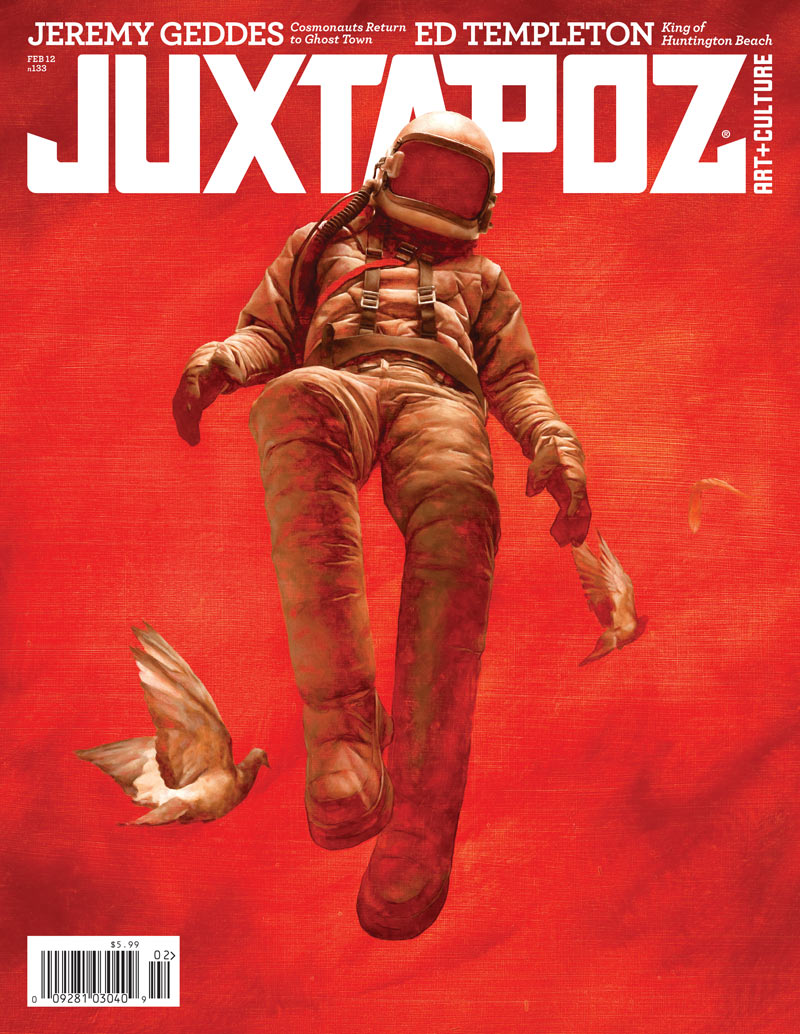
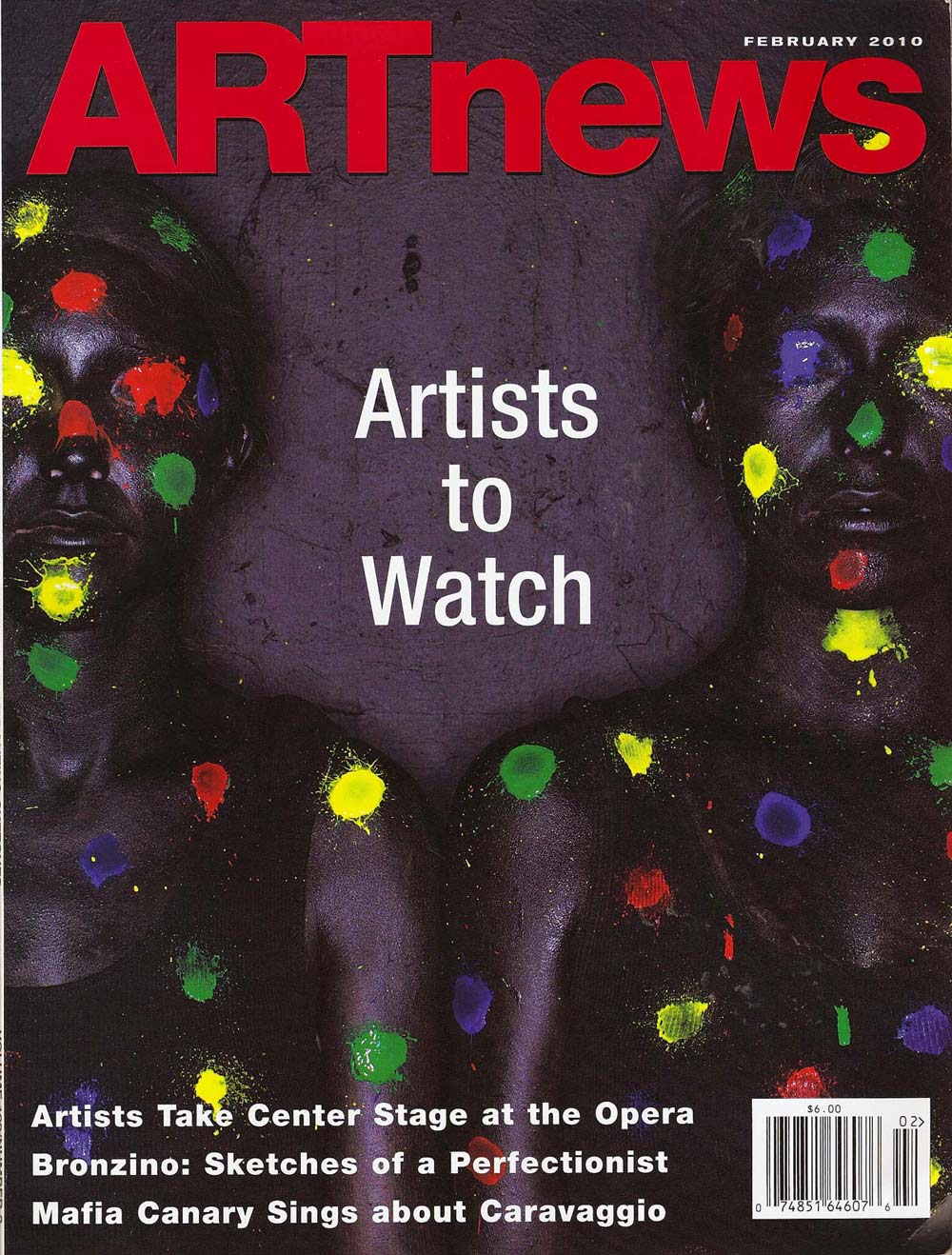
A few magazines I would take pride in working for...

Issue 69
All three are centered in art and culture on the edges of the norm and I would love to be the person that gets to search people out and communicate with the genius behind the featured work. The whole industry is a little too fast paced for me personally, so I'll just follow my nose.


Ideally...


In one year, I'm rooming in Kansas City with my best friend and going to a school that works with our creative energy. The state of our home is an artist's kind of tidy with the smell of coffee grounds and open bottles of paint. There are scattered school projects in various spaces, open sketchbooks, and a book shelf with our respectable libraries combined. Most of my possessions are still at my parent's house that I visit a few times a month. I have a job somewhere on the Plaza making just enough to scrape by. Paintbrushes are all around the house and I always have some kind of art supplies under my nails. We have a dog and a cat. I still communicate with a handful of teachers from High School and send them snail mail with Polaroids of my adventures (if I have the money for film) and cheesy stickers.
MaryAnn Puls' studio space:

In 5 years, I will know another language and have piles of stories to share with the people I meet through the job that I have. I work in the community through my social practice certificate. I'm still in Kansas City with Niki and the friends I made in college but we are all wondering about other possibilities in other locations. We have more pets and a garden that produces more vegetables than we can handle. Our house has lots of windows that are open as much as possible in the summer. The library is bigger, I have a few tattoos.

In 10 years, I will live in a different country where I know the language and culture. It's exactly the kind of place that I need to be and I get to support myself and the person I'm married to/plan on marrying. My family visits me once a year and I get to show them tons of exciting places and the people who know me.

In 50 years, my student debt is payed. I support young artists and buy their work regularly to add to my private collection. I'm married and have the space for a lot of shelter animals. I live somewhere near mountains and it's very green. I still paint and share music with people.


It's hard for me to plan so far ahead into the future, but these are the fun possibilities.

Friday, February 19, 2016

Six Word Memiors

"There is so much unfinished work"
John Kurtz's Artist Studio
(work space of John Kurtz)


"You can't have too many dogs"
Image result for tilda swinton dogs

"let's get coffee and go longboarding"
Long boarding quotes:
"...but would Brian Eno like it?"


"There's a whole lot to notice"


Tuesday, February 16, 2016

" Quotations "

"Just do your work. And if the world needs your work it will come and get you. And if it doesn't, do your work anyway. You can have fantasies about having control over the world, but I know I can barely control my kitchen sink. That is the grace I'm given. Because when one can control things, one is limited to one's own vision." --Kiki Smith

"Fear is a manipulative emotion that can trick us into a boring life" --Donald Miller

"I have been made so you can use me again and again." --a plastic bag

"I know for an honest to goodness fact that life can kick you to pieces, break you into a thousand little shards, and that you can get up again and mend yourself. I promise." --Nick Lake

"I guess I even feel more freewheeling these days. I definitely feel more philosophically freewheeling. I’m just not so certain that anything I learned or was taught is right. I think experience has made me really scared of absolutes – absolute systems of government, absolute religions, absolute life – all these things I’m incredibly wary of now...I’m just a curious old sod. I just want to know how everything works. I’m a nosy old bastard. I just have to know about things, and I can’t see how anybody can live on this planet and not want to. I get so despondent when people seem to curl up and die. They just don’t have any interest in living anymore. I want to shake them and say, “Look, it’s still great out there!” Every day is great. And to let these days just go by you is a waste of a gift you’ve been given. Life is a gift from God, and to waste it is a great sin. Go do something for somebody else, if you’re bored. Just don’t sit there being a lump." --David Bowie

"Of course, play is equally as important to your education as work. And in the fine arts, play is work, isn’t it? What other field allows you to deduct as business expenses from your taxes gangsta rap, Gaspar NoĆ©’s movies, even vintage porn as long as you use it for research? Remember: You must participate in the creative world you want to become part of. So what if you have talent? Then what? You have to figure out how to work your way inside. Keep up with what’s causing chaos in your own field.
If you’re a visual artist, go see the shows in the galleries that are frantically competing to find the one bad neighborhood left in Manhattan to open up in.
Watch every movie that gets a negative review in the New York Times and figure out what the director did wrong.
Read, read, read!
Watch people on the streets. Spy, be nosy, eavesdrop." --John Waters (read the rest of his commencement address here.

Monday, February 15, 2016

Memorable Passage


"My mother said it was like a cassette tape you could never rewind. But it was hard to remember you couldn't rewind it while you were listening to it. And so you'd forget and fall into the music and listen and then, without you even knowing it, the tape would suddenly end." --Tell the Wolves I'm Home.

Yet, another passage from this book that has its roots so deeply plunged into my every day life. I've always had such a hard time staying in the present. It's really not much of a surprise since I'm at such a transitional point in my life, but when I'm caught up in the past or future it makes me wonder what I'm missing out on in the present moment. I worry about not being able to look back on something the way I'd like to, and while I'm worrying about that I'm absent from what's happening around me. I always like to make sure that I can enjoy details of a memorable event with crystal clarity when it's possible, but while I'm worried about what I'm going to remember, the present will be flying past me like a train that I have hop onto. Over the summer I learned that creating and analyzing are two separate processes. While that is certainly true for making anything in the fine arts, I'm starting to realize it's the same for memories in a way. I just wonder if it helps to be completely saturated in the moment and then go back and remember what you think affected you whether its seconds, days, or years. Is there even a way, an algorithm, to remember things the way you'd like to or is each and every second different than the last?

Writers as Readers

My ideal reading spot is on a blanket in the shade when the weather allows. If that's not possible or I'm not feeling up to going outside, I can manage to accidentally read half of a book just stretched out on the couch with a particular blanket and my cat tucked away in the crook of my leg. Candles are usually lit and it's mid morning on a lazy day. Ideally, the house is empty and the blinds are open, but I enjoy it just as much listening to my family cook. I would seriously not complain about a hammock on the beach though...

My sophomore year I went to New York City in the springtime. I returned a week later with half of my suitcase loaded with books. One is from St. Mark's (How Music Works by David Byrne) and the others are from McNally Jackson. 

 When I came back from my trip, I was having a pretty rough time with anxiety and the usual residual PTSD junk, so I would just finish up my useless geometry homework and run out to the yard to try and hastily throw myself into the hundred dollars worth of books. Since then my best reading days have been spent in my house alone on Saturday mornings. I'll wake up at 9 a.m., read until 2 p.m., get to work by 3, and come back at 11:30 p.m. to pick up where I left off until I fall asleep. 

Tell the Wolves I'm Home by Carol Rifka Brunt and The Price of Salt by Patricia Highsmith were the recent page-turners for me. It's a magical thing for a book to keep my attention longer than half an hour because I usually skip around and dip into two or three different worlds at a time. I invested so much of my interest into the characters in The Price of Salt, I just wanted to see what trouble they would find next and the way Highsmith writes is like shopping for little romantic snippets. Every page is an isle. Tell the Wolves is the same way but it was something I could closely relate to. The main character is going through the day to day function/cycles of loss and happiness just like I am. It was just nice to read that I'm not just being a big baby.


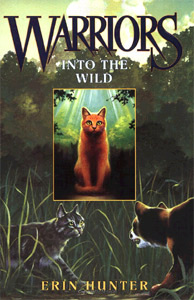
I haven't had a chance to invest my soul into a book series since I was around 12-14, but there are two that remain with me. The Warrior Cats  series by Erin Hunter really kept me reading from 5th grade up until I was supposed to start high school. I really had a thing for wild animal books back then. Warriors led me to The Sight and the sequel Fell, by David Clement-Davies. I never actually finished Fell, and I don't think I ever will because that's something I never wanted to end even though I skipped around in the first book. But I mean really, what could be cooler than prophetic wolves with scary paranormal powers? Talking deer, which is why I also became obsessed with Fire bringer, and could be part of the reason I have such an affinity with antlers.


When I finished reading The Price of Salt I was thrilled that I'd finally found a romance novel about elegant women that didn't end in tragedy or something enforced by the publishing company. I don't want to give too much away, but this book had a very satisfying ending that can probably never be topped, in my opinion.